1. Indications and Usage
Glycemic Control: This fixed-dose combination is indicated for adults with type 2 diabetes who have inadequate glycemic control with metformin alone.
Complementary Therapy: It is used in conjunction with diet and exercise to improve blood glucose levels through three complementary mechanisms.
2. Dosage and Administration
Starting Dose: The recommended starting dose for this formulation (Type Ⅱ) is one tablet once daily, taken with breakfast.
Administration: The tablet must be swallowed whole with water. It should not be chewed, split, or crushed, as this would destroy the sustained-release structure.
Missed Dose: If a dose is missed, it should not be doubled. The next dose should be taken at the usual time the following day.
3. Mechanism of Action
Henagliflozin Proline: An SGLT-2 inhibitor that promotes urinary glucose excretion by inhibiting glucose reabsorption in the kidneys.
Retagliptin Phosphate: A DPP-4 inhibitor that increases the levels of incretins (GLP-1 and GIP), thereby enhancing glucose-dependent insulin secretion and suppressing glucagon release.
Metformin Hydrochloride: A biguanide that decreases hepatic glucose production, decreases intestinal glucose absorption, and improves insulin sensitivity in peripheral tissues.
4. Safety and Warnings
Hypoglycemia: While the risk is low when used alone, the risk increases when used with insulin or sulfonylureas.
Lactic Acidosis: A rare but serious complication associated with metformin, particularly in patients with renal impairment, sepsis, or dehydration.
Urinary Tract Infections: SGLT-2 inhibitors increase the risk of genitourinary infections due to glucosuria.
Renal and Hepatic Function: Renal function must be assessed prior to initiation and monitored regularly. It is contraindicated in severe renal impairment.
5. Adverse Reactions and Clinical Research
Common Adverse Reactions: Urinary tract infections, glycosuria, weight loss, and gastrointestinal disturbances (nausea, diarrhea) are common.
Other Adverse Effects: Hyperparathyroidism, increased urine albumin-to-creatinine ratio, and fatigue have been reported.
Clinical Findings: Clinical trials have demonstrated significant reductions in HbA1c compared to monotherapy, with a safety profile consistent with the individual components.
6. Drug Interactions
Alcohol: Intake should be limited due to the increased risk of lactic acidosis and hypoglycemia.
Insulin and Sulfonylureas: Concurrent use may increase the risk of hypoglycemia, requiring dose adjustments.
Cationic Drugs: Drugs eliminated by renal tubular secretion (e.g., amiloride, digoxin) may compete with metformin.
Contrast Media: Iodinated contrast agents may increase the risk of renal failure and lactic acidosis.
7. Pharmaceutical Information
Active Ingredients: Henagliflozin Proline, Retagliptin Phosphate, and Metformin Hydrochloride.
Strength: Commonly available as Type Ⅱ (e.g., 10mg/100mg/1000mg per tablet).
Appearance: Film-coated sustained-release tablets.
Storage: Store below 25°C in a dry place.
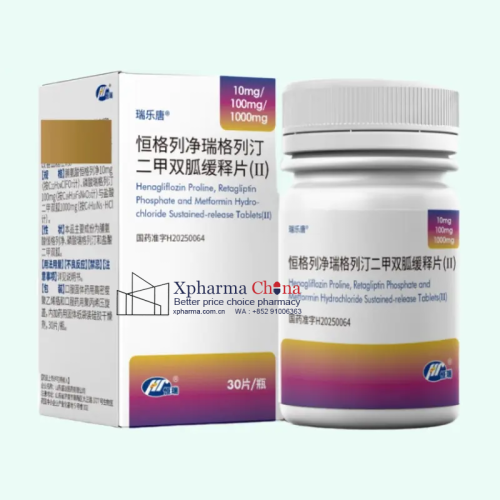
Ruiletang Henagliflozin Proline, Retagliptin Phosphate and Metformin Hydrochloride Sustained‑release Tablets (Ⅱ)
Brand Name: 瑞乐唐®(Ruiletang®)
Generic Name: Henagliflozin Proline, Retagliptin Phosphate and Metformin Hydrochloride
Strength: 10 mg Henagliflozin Proline, 100 mg Retagliptin Phosphate and 1000 mg Metformin Hydrochloride per tablet, 30 tablets per bottle
Manufacturer: Hengrui Medicine Co., Ltd.
Marketing Authorization Holder: Hengrui Medicine Co., Ltd.
Approval Date in China: 2025‑04‑18
Registration Number: 国药准字H20250064
Storage: Store in tightly closed containers, keep dry.
Price&Cost:Contact Us now for the best price of Henagliflozin Proline, Retagliptin Phosphate and Metformin Hydrochloride(Ruiletang)
Only logged in customers who have purchased this product may leave a review.


Reviews
There are no reviews yet.