- Indications and Usage Rilertinib is indicated for the treatment of adult patients with locally advanced or metastatic non-small cell lung cancer (NSCLC) with sensitizing EGFR mutations (Exon 19 deletion or Exon 21 L858R substitution) as first-line therapy, and for patients who have progressed on or after EGFR-TKI therapy and have confirmed EGFR T790M mutation-positive disease.
- Dosage and Administration Recommended Dosage: The recommended dosage is 200 mg orally once daily until disease progression or intolerable toxicity. Administration: It can be taken with or without food. The tablet should be swallowed whole with water and should not be chewed or crushed. Missed Dose: If a dose is missed and the delay is more than 12 hours, the missed dose should be taken. Dose Modification: If dose reduction is required due to adverse reactions, the dose should be reduced to 100 mg once daily.
- Mechanism of Action Rilertinib is a third-generation epidermal growth factor receptor tyrosine kinase inhibitor (EGFR-TKI). It inhibits wild-type EGFR, sensitized mutations (Exon 19 deletion and L858R), and the resistant T790M mutation, thereby blocking downstream signaling pathways and inhibiting tumor cell growth.
- Safety and Warnings Interstitial Lung Disease: Permanent discontinuation is required for any grade of interstitial lung disease. QTc Prolongation: Monitor ECG. Suspend treatment if QTc interval exceeds 500 ms. Hepatic and Renal Impairment: No dosage adjustment is required for mild impairment. Use with caution in moderate-to-severe hepatic or severe renal impairment. Fetal and Neonatal Toxicity: Can cause fetal harm. Advise females of reproductive potential to use effective contraception.
- Adverse Reactions and Clinical Research The most common adverse reactions include rash, diarrhea, elevated liver enzymes, fatigue, and pruritus. Serious adverse reactions may include interstitial lung disease, QTc interval prolongation, and cardiomyopathy.
- Drug Interactions CYP3A Inhibitors: Concomitant use with strong CYP3A inhibitors may increase plasma concentrations of rilertinib. CYP3A Inducers: Concomitant use with strong CYP3A inducers may decrease plasma concentrations of rilertinib. Drugs Prolonging QTc Interval: Concomitant use may increase the risk of QTc interval prolongation.
- Pharmaceutical Information Composition: The active ingredient is Rilertinib Mesylate. Excipients include microcrystalline cellulose, lactose, low-substituted hydroxypropyl cellulose, magnesium stearate, and film coating premix. Appearance: Tablets. Storage: Store in the original carton at controlled room temperature.
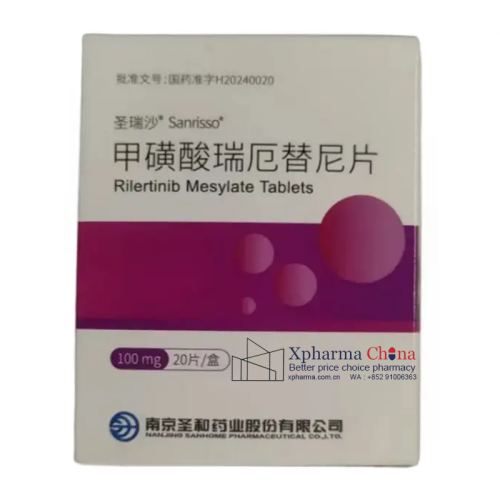
Sanrisso Rilertinib Mesylate Tablets
Brand Name: 圣瑞沙 ®(Sanrisso®)
Generic Name: Rilertinib Mesylate
Strength: 100 mg per tablet, 20 tablets per box
Manufacturer: Nanjing Sanhome Pharmaceutical Co., Ltd.
Marketing Authorization Holder: Nanjing Sanhome Pharmaceutical Co., Ltd.
Approval Date in China: June 11, 2024
Registration Number: 国药准字H20240020
Storage: Store sealed and protected from light at a temperature not exceeding 25°C. Keep out of reach of children. Refer to the full package insert for detailed storage specifications.
Price&Cost:Contact Us now for the best price of Rilertinib Mesylate(Sanrisso)
Only logged in customers who have purchased this product may leave a review.

Reviews
There are no reviews yet.