1. Indications and Usage
Glycemic Control: Indicated as an adjunct to diet and exercise to improve glycemic control in adults with type 2 diabetes mellitus.
Combination Therapy: Can be used in combination with metformin or thiazolidinediones.
2. Dosage and Administration
Starting Dose: The recommended dose is 50 mg once daily, taken orally without regard to meals.
Renal Adjustment: For patients with severe renal impairment (including those on dialysis), the recommended dose is 25 mg once daily.
Hepatic Impairment: No dosage adjustment is necessary for patients with mild to moderate hepatic impairment. There is no experience in severe hepatic impairment.
Missed Dose: If a dose is missed, it should be taken as soon as remembered. If it is close to the next dose, skip the missed dose.
3. Mechanism of Action
DPP-4 Inhibition: Sitagliptin is a potent, selective, and reversible inhibitor of dipeptidyl peptidase-4 (DPP-4).
Incretin Regulation: It inhibits the inactivation of incretin hormones (GLP-1 and GIP), increasing their plasma concentrations.
Glucose-Dependent Effects: Elevated incretin levels enhance glucose-dependent insulin secretion and suppress glucagon release from the liver, thereby lowering blood glucose levels.
4. Safety and Warnings
Heart Failure: Post-marketing cases of heart failure have been reported with DPP-4 inhibitors. Patients should be monitored for signs and symptoms, and the drug discontinued if they occur.
Pancreatitis: Acute pancreatitis, including fatal and non-fatal hemorrhagic or necrotizing pancreatitis, has been reported. If suspected, discontinue immediately.
Hypersensitivity: Severe hypersensitivity reactions, including anaphylaxis, angioedema, and exfoliative skin conditions (e.g., Stevens-Johnson syndrome), have been reported.
Bullous Pemphigoid: Blistering skin conditions have been reported with DPP-4 inhibitors; patients should be advised to discontinue the drug if blistering occurs.
5. Adverse Reactions and Clinical Research
Common Adverse Reactions: Nasopharyngitis, headache, and diarrhea.
Hypoglycemia: Low risk as monotherapy, but the risk increases when used in combination with sulfonylureas or insulin.
Other Adverse Effects: Hypersensitivity reactions, arthralgia, and rash.
Clinical Findings: Clinical trials have demonstrated significant reductions in HbA1c and fasting plasma glucose with a low incidence of hypoglycemia.
6. Drug Interactions
Renal Elimination Competitors: Sitagliptin is eliminated unchanged by the kidneys. Drugs that interfere with renal tubular secretion (e.g., cimetidine) may increase sitagliptin exposure, though no dosage adjustment is typically required.
Hypoglycemic Agents: Concomitant use with insulin or sulfonylureas increases the risk of hypoglycemia.
Other Agents: No significant interactions with CYP450 enzymes are expected as sitagliptin is not extensively metabolized.
7. Pharmaceutical Information
Active Ingredient: Sitagliptin Phosphate.
Strengths: Typically available as 25 mg, 50 mg, and 100 mg tablets.
Appearance: Film-coated tablets, typically cherry red or pinkish-red.
Storage: Store at controlled room temperature (20°C to 25°C) in a dry place, protected from light and moisture.
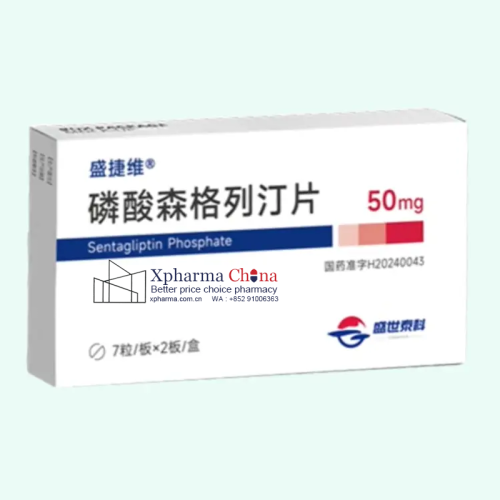
Shengjiewei Sentagliptin Phosphate Tablets
Brand Name: 盛捷维®(Shengjiewei®)
Generic Name: Sentagliptin Phosphate
Strength: 50 mg per tablet, 14 tablets per box
Manufacturer: Shiji Taike Pharmaceutical Co., Ltd.
Marketing Authorization Holder: Shiji Taike Pharmaceutical Co., Ltd.
Approval Date in China: 2024‑11‑15
Registration Number: 国药准字 H20240043
Storage: Store in a sealed, dry place, protected from light.
Price&Cost:Contact Us now for the best price of Sentagliptin Phosphate(Shengjiewei)
Only logged in customers who have purchased this product may leave a review.

Reviews
There are no reviews yet.