1. Indications and Usage
Allergic Rhinitis: Treatment of allergic rhinitis.
Urticaria: Treatment of urticaria.
Pruritic Dermatoses: Treatment of pruritic dermatoses including eczema, dermatitis, urticaria, pruritus, and psoriasis vulgaris.
2. Dosage and Administration
Route of Administration: Oral administration ONLY.
Adults and Children ≥7 years: Typically 5 mg twice daily (morning and bedtime).
Children 2 to <7 years: Typically 2.5 mg twice daily (morning and bedtime).
Critical Administration Instructions:
Renal Impairment: Use with caution in patients with renal impairment due to possible sustained high plasma concentration.
Elderly: Use with caution in elderly patients, particularly the very old.
Missed Dose: Take as soon as remembered, but do not double the dose.
3. Mechanism of Action
H1 Receptor Antagonism: Olopatadine selectively antagonizes histamine H1 receptors, blocking the direct effects of endogenous histamine.
Mast Cell Stabilization: It inhibits the release of mediators (e.g., leukotrienes, platelet-activating factor) from mast cells and basophils.
Dual Action: This dual mechanism provides both rapid relief of allergic symptoms and suppression of the allergic response.
4. Safety and Warnings
Sedation: Olopatadine may cause somnolence or fatigue. Patients should be advised to avoid operating heavy machinery or driving.
Hepatotoxicity: Severe hepatic injury, including jaundice and liver enzyme elevation (ALT, AST), has been reported. Liver function should be monitored if abnormalities arise.
Cardiovascular Risk: Although rare, myocardial infarction and other cardiovascular events have been reported; clinical vigilance is required.
Contraindications: Contraindicated in patients with known hypersensitivity to olopatadine or its components.
5. Adverse Reactions and Clinical Research
Most Common Adverse Reactions: Somnolence, fatigue, dry mouth, abdominal pain, and nausea.
Laboratory Abnormalities: Elevations in ALT, AST, γ-glutamyltransferase (γ-GT), lactate dehydrogenase (LDH), and alkaline phosphatase (ALP).
Clinical Research Highlights: Clinical trials have demonstrated superior efficacy in treating allergic rhinitis and urticaria compared to traditional antihistamines, with a generally favorable safety profile.
6. Drug Interactions
CNS Depressants: Concomitant use with alcohol or other central nervous system depressants may potentiate sedative effects.
Metabolic Interactions: Olopatadine is not significantly metabolized by major CYP450 enzymes; therefore, interactions with CYP inducers or inhibitors are unlikely.
7. Pharmaceutical Information
Chemical Composition: Active Ingredient: Olopatadine Hydrochloride.
Appearance: Pink or light pink coated granules.
Packaging: Available in various pack sizes (e.g., 2.5 mg or 5 mg per sachet).
Storage: Store at or below 25°C in a well-closed container, protected from moisture.
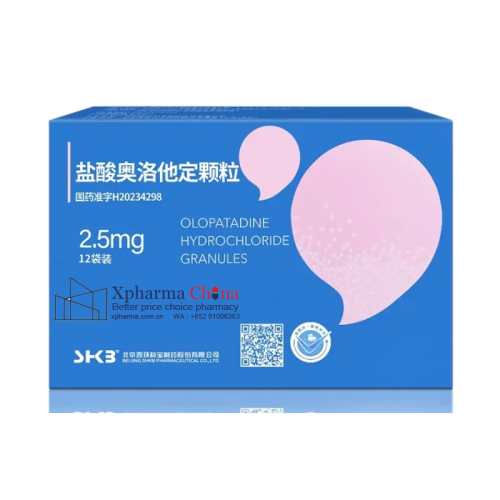
Suling Olopatadine Hydrochloride Granules
Brand Name:苏苓 ®(Suling®)
Generic Name: Olopatadine Hydrochloride
Strength: 2.5 mg per sachet, 12 sachets per box
Manufacturer: Beijing SHKB Pharmaceutical Co., Ltd.
Marketing Authorization Holder: Beijing SHKB Pharmaceutical Co., Ltd.
Approval Date in China: October 18, 2023
Registration Number:国药准字 H20234298
Storage: Store tightly sealed, protected from light, at a temperature not exceeding 30°C. Refer to the full package insert for detailed storage specifications.
Price&Cost:Contact Us now for the best price of Olopatadine Hydrochloride(Suling)
Only logged in customers who have purchased this product may leave a review.
Reviews
There are no reviews yet.