
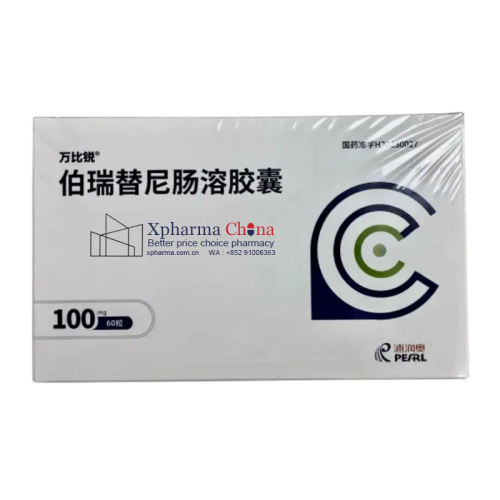
1. Indications and Usage
According to the “Guidelines for the Clinical Application of Novel Anti-Tumor Drugs” (2024 Edition), Vebreltinib is used to treat patients with locally advanced or metastatic non-small cell lung cancer with MET exon 14 skipping mutations. Before medication, it must be confirmed that a well-validated detection method has detected a positive MET exon 14 skipping mutation.
2. Dosage and Administration
Recommended Dosage: The recommended starting dose is 200 mg administered orally twice daily (morning and evening) until disease progression or unacceptable toxicity.
Administration: Take the capsules on an empty stomach (fasting for at least 2 hours before and 30 minutes after the dose; water is allowed). Swallow whole; do not chew or crush.
Missed or Vomited Doses: Do not make up missed doses. If vomiting occurs, do not replace the dose; resume the regular schedule with the next dose.
Renal/Hepatic Impairment: No dose adjustment is needed for mild hepatic or mild-to-moderate renal impairment. Use with caution in moderate/severe hepatic or severe renal impairment.
3. Mechanism of Action
Vebreltinib is a high-selective inhibitor of the c-MET tyrosine kinase. It blocks the activation of the MET pathway, thereby inhibiting tumor cell proliferation, migration, and invasion driven by MET exon 14 skipping mutations.
4. Safety and Warnings
Common Adverse Reactions: Peripheral edema and hypoproteinemia are the most common adverse reactions (incidence ≥20%).
Hepatotoxicity: Monitor liver function, especially in patients with moderate or severe hepatic impairment.
Renal Toxicity: Monitor renal function, particularly in patients with severe renal impairment.
5. Adverse Reactions and Clinical Research
Adverse Reactions: In addition to peripheral edema and decreased blood albumin, other potential toxicities include hepatotoxicity and renal function abnormalities.
Clinical Research: Clinical trials have demonstrated significant efficacy in non-small cell lung cancer patients harboring MET exon 14 skipping mutations, with efficacy dependent on the specific mutation status.
6. Drug Interactions
CYP3A4 Inhibitors/Inducers: Avoid concomitant use with strong CYP3A4 inhibitors (e.g., itraconazole) or strong CYP3A4 inducers (e.g., phenytoin, rifampicin, carbamazepine).
MATE2-K Substrates: Avoid concomitant use with MATE2-K substrate drugs. If unavoidable, reduce the dose of the MATE2-K substrate drug and monitor for increased exposure.
7. Pharmaceutical Information
Composition: The active ingredient is vebreltinib.
Appearance: Capsules with opaque blue caps and opaque white bodies, containing white to pale yellow granules.
Specifications: Available in 25 mg and 100 mg strengths.
Reviews
There are no reviews yet.