
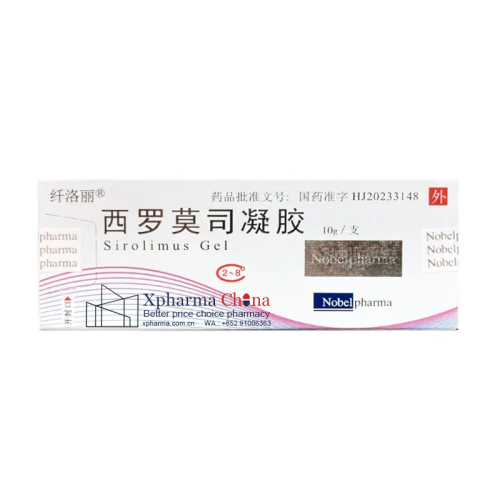
1. Description
Sirolimus gel is a topical semi-solid pharmaceutical formulation containing the macrolide immunosuppressant sirolimus (rapamycin), with a concentration typically ranging from 0.1% to 1% w/w. It is a translucent, colorless to pale yellow hydroalcoholic gel base, formulated with excipients including carbomer, propylene glycol, glycerin, trolamine and purified water, designed for percutaneous absorption with minimal systemic exposure.
2. Indications
Topical treatment of facial angiofibromas associated with tuberous sclerosis complex (TSC) in adult and pediatric patients aged 6 years and older. It is also used off-label for the management of other dermatological conditions including refractory psoriasis, facial lupus erythematosus, and superficial vascular malformations.
3. Dosage and Administration
3.1 Administration
Sirolimus gel is for dermatological topical use only, strictly for external application, must not be used ophthalmically, orally or intravaginally. Apply a thin uniform layer to the affected clean, dry skin areas, and gently rub in until fully absorbed. Avoid covering the treated area with occlusive dressings unless directed by a physician.
3.2 Dosage
Standard Regimen: Apply a thin layer of 0.2% sirolimus gel to the target lesions twice daily, at 12-hour intervals.
Pediatric Patients (6-17 years): Initiate treatment with 0.1% gel once daily, then escalate to twice daily application as tolerated.
Duration of Treatment: Continuous application for 12 weeks is recommended to achieve significant clinical improvement. Maintenance application 1-2 times daily can be continued long-term to sustain therapeutic effect.
No dose adjustment is required for mild to moderate renal or hepatic impairment, due to extremely low systemic absorption.
4. Warnings and Precautions
Local Skin Irritation: Transient erythema, dryness, pruritus and mild burning sensation at the application site are common in the first 2-4 weeks of treatment. Avoid contact with broken skin, mucous membranes and eyes.
Systemic Immunosuppression Risk: Prolonged application over large body surface areas may lead to detectable sirolimus plasma concentrations. Monitor blood sirolimus levels in patients with extensive lesion coverage, to avoid systemic immunosuppression.
Sun Sensitivity: Sirolimus may increase skin photosensitivity. Advise patients to use broad-spectrum sunscreen and avoid excessive unprotected sun exposure during treatment.
Lymphocele/Lymphedema: Rare local cases of lymphatic dysfunction related to long-term topical sirolimus have been reported in post-marketing observations.
5. Contraindications
Confirmed severe hypersensitivity to sirolimus or any excipients in the gel formulation, presenting as generalized urticaria, severe contact dermatitis or anaphylactoid reaction.
Application on open wounds, infected skin lesions or extensive burn areas, which will significantly increase systemic drug absorption.
Concomitant use of other topical immunosuppressants (such as tacrolimus ointment) on the same treatment area, to avoid additive local immunosuppression.
6. Adverse Reactions
Very Common (≥ 10% incidence): Application site irritation, dry skin, pruritus, mild erythema, desquamation.
Common (1-10% incidence): Local acneiform eruption, mild burning sensation, telangiectasia at the application site.
Serious Adverse Reactions: Rare cases of severe allergic contact dermatitis, and very rare systemic immunosuppression-related adverse events in patients with large-area long-term application.
7. Drug Interactions
Strong CYP3A4 Inhibitors (Topical/Systemic): Concomitant use of topical ketoconazole or systemic itraconazole may slightly increase the percutaneous absorption of sirolimus. Monitor for signs of enhanced local adverse reactions.
Strong CYP3A4 Inducers: Systemic rifampicin may reduce the plasma concentration of sirolimus absorbed through the skin, potentially weakening the therapeutic effect.
Other Topical Dermatological Preparations: Do not apply other creams, lotions or ointments to the same treatment area within 2 hours before and after sirolimus gel application, to avoid altering the percutaneous absorption rate of the drug.
8. Use in Specific Populations
Pregnancy: Sirolimus gel should be used during pregnancy only if the potential benefit justifies the potential risk to the fetus. Systemic exposure after topical application is extremely low, but systemic sirolimus is known to have reproductive toxicity.
Lactation: It is unknown whether topically absorbed sirolimus is excreted in human breast milk. Avoid application on the chest area that may come into direct contact with the infant.
Pediatric Use: Safety and effectiveness are confirmed in patients aged 6 years and older. The drug is not recommended for children under 6 years old due to insufficient clinical data.
Geriatric Use: No overall difference in safety or efficacy was observed in elderly patients. No special dose adjustment is required.
Renal/Hepatic Impairment: No dose adjustment is needed for any stage of renal or hepatic impairment, as the systemic drug exposure from topical administration is negligible.

Reviews
There are no reviews yet.