1. Indications and Usage
Anemia of Chronic Kidney Disease: Indicated for the treatment of anemia due to chronic kidney disease (CKD).
Usage Limitation: It is not indicated for the treatment of anemia associated with chemotherapy or radiotherapy.
2. Dosage and Administration
Route of Administration: Subcutaneous or intravenous injection.
Recommended Dosage: The recommended starting dose is 500 IU administered once weekly. The dose may be adjusted based on the anemia severity and patient response.
Titration: If the hemoglobin response is inadequate, the dose can be increased in increments of 250 IU every 4 to 8 weeks. If the hemoglobin level reaches the target range, the dose should be decreased to maintain levels.
Target Hemoglobin: The goal is to avoid rapid increases in hemoglobin. The target hemoglobin level should generally not exceed 11 g/dL.
Missed Dose: If a dose is missed, it should be administered as soon as possible, and the subsequent dose schedule adjusted accordingly.
3. Mechanism of Action
Erythropoiesis Stimulation: Pegmolesatide is a pegylated recombinant human erythropoietin.
Receptor Binding: It binds to and activates the erythropoietin receptor on erythroid progenitor cells in the bone marrow.
Cellular Proliferation: This activation stimulates the proliferation, differentiation, and survival of red blood cell precursors, thereby increasing the red blood cell mass.
4. Safety and Warnings
Thromboembolic Events: There is an increased risk of serious thromboembolic events, including myocardial infarction, stroke, and venous thromboembolism, particularly when the hemoglobin level exceeds 11 g/dL or rises rapidly.
Tumor Progression: In patients with cancer, erythropoietin products may shorten the overall survival and increase the risk of tumor progression.
Hypertension: Significant increases in blood pressure may occur. Blood pressure should be monitored closely, and antihypertensive therapy may be required.
Pure Red Cell Aplasia: Severe anemia and neutralizing antibodies against erythropoietin may occur.
5. Adverse Reactions and Clinical Research
Most Common Adverse Reactions: Hypertension, headache, dizziness, edema, and injection site reactions.
Serious Adverse Reactions: Thromboembolic events, seizures, and pure red cell aplasia.
Clinical Research Highlights: Clinical trials have demonstrated that pegmolesatide effectively increases hemoglobin levels and reduces the need for red blood cell transfusions in patients with CKD-related anemia.
6. Drug Interactions
Iron Chelators: Concomitant use with iron chelators may reduce the efficacy of pegmolesatide.
Antihypertensive Agents: May require dose adjustment of antihypertensive medications due to the potential for increased blood pressure.
Other Erythropoiesis-Stimulating Agents: Concomitant use with other erythropoietin products is not recommended.
7. Pharmaceutical Information
Chemical Composition: Active ingredient: Pegmolesatide (Recombinant human erythropoietin).
Appearance: Clear to slightly opalescent, colorless to pale yellow liquid.
Packaging: Supplied in pre-filled syringes or vials (e.g., 2000 IU/0.5 mL).
Storage: Store in a refrigerator at 2°C to 8°C; do not freeze or shake. Protect from light.
Shengluolai Pegmolesatide Injection
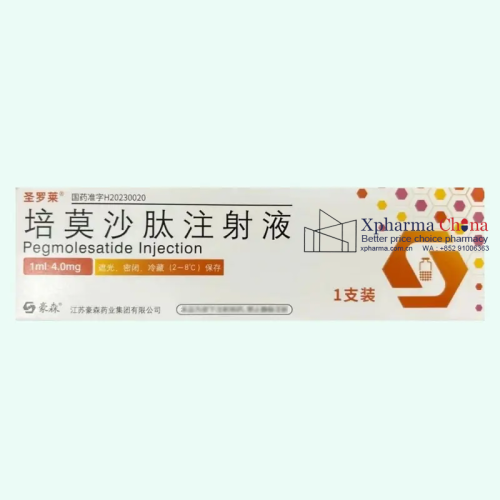
Brand Name:圣罗莱 ®(Shengluolai®)
Generic Name: Pegmolesatide
Strength: 4.0 mg per 1 mL vial, 1 vial per box
Manufacturer: Jiangsu Hansoh Pharmaceutical Group Co., Ltd.
Marketing Authorization Holder: Jiangsu Hansoh Pharmaceutical Group Co., Ltd.
Approval Date in China: July 12, 2023
Registration Number: 国药准字H20230020
Storage: Seal tightly, protect from light, store refrigerated at 2–8°C. Do not freeze. Refer to the full package insert for detailed storage specifications.
Price&Cost:Contact Us now for the best price of Pegmolesatide(Shengluolai)
Only logged in customers who have purchased this product may leave a review.
Reviews
There are no reviews yet.